Quick Answer: Roof framing labor runs $3–$7 per square foot of roof surface in 2026, depending on pitch and complexity. Materials add $1.50–$3.50 per square foot for lumber and hardware. A simple 1,500 sq ft roof on a rectangular house typically costs $7,000–$15,000 total framed.
Roof framing costs catch a lot of people off guard. The estimate you got for a "complete roof" often includes only sheathing, felt, and shingles, not the structural framing underneath. If your project is new construction or a structural re-roof, you need to budget the framing as a separate line item.
Before running numbers, use our rafter calculator to get accurate rafter counts and lumber footage for your specific span and pitch, this data feeds directly into your material takeoff.
What Goes Into the Cost
Roof framing costs break into three buckets: labor, structural lumber, and hardware. Each scales differently with roof complexity.
Labor Rates in 2026
In most US markets, framing labor for a standard residential roof runs $3.50–$5.50 per square foot of roof surface area. That's roof surface area, not floor area, a 1,500 sq ft footprint with a 6/12 pitch has about 1,677 sq ft of roof surface (multiply by the 1.118 pitch factor).
At $4.50/sq ft on 1,677 sq ft, you're looking at about $7,550 in labor alone.
Complex roofs command a premium:
- Hip roofs: Add 20–30% over a comparable gable roof
- Steep pitches (8/12+): Add 15–25% for staging and safety gear
- Multiple valleys and dormers: Each adds $500–$2,000 depending on size
- Rural markets: Often 20–30% lower than metro areas
High-cost metros like San Francisco, Seattle, and New York regularly see framing labor at $6–$9 per square foot. In the Southeast and Midwest, $3–$4 is realistic for a simple gable.
Lumber Costs by Size
Lumber prices fluctuate with commodity markets. As of early 2026, expect these ranges for #2 SPF or Southern Yellow Pine:
Most residential roofs at 6/12 or lower pitch use 2×8 rafters at 16" on center. At $1.50/lf for 2×8, a 1,000 sq ft floor plan home with 14-foot structural rafter lengths and 60 total rafters costs roughly:
60 rafters × 16 ft (stock length) × $1.50 = $1,440 in rafter lumber
Add the ridge board, collar ties, hurricane straps, joist hangers, and nails, figure another $300–$600 in hardware, and total materials for that basic roof land at $1,700–$2,100.
For a complete material list tailored to your exact plan, calculate your rafter dimensions and use the lumber count output as your purchase list.
Hardware and Connectors
Hardware is easy to overlook but adds up fast on a full roof:
- Hurricane/H-clip ties (Simpson H2.5A): $0.80–$1.20 each. Required in most wind zones under IRC R802.11.
- Collar ties or rafter ties: Required at 4 ft on center maximum per IRC R802.4.1. Budget $50–$150 for a standard gable.
- Framing nails (3-1/2", 16d): A 5 lb box covers roughly 80–100 nails, enough for 10–15 rafters. Figure $30–$60 total.
- Ridge board connectors: If using a structural ridge beam, add LVL splice plates and beam hangers.
Stick Framing vs. Trusses: Cost Side by Side
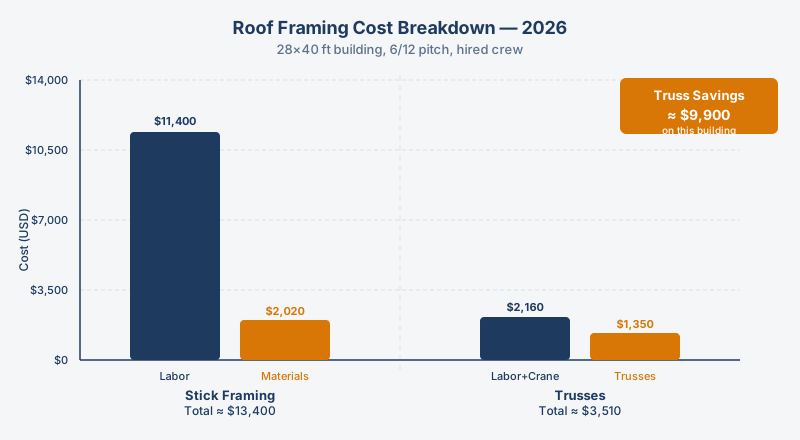
For a 28×40 ft rectangular building with a 6/12 pitch at 16" OC:
Stick framing:
- Rafters: 30 per side × 2 sides × 18 ft stock = 1,080 lf @ $1.50 = $1,620
- Ridge board: 42 ft @ $1.20 = $50
- Hardware, ties, etc.: $350
- Total materials: ~$2,020
- Labor (2,530 sq ft roof surface × $4.50): ~$11,385
- Total stick-framed: ~$13,400
Trusses:
- 21 trusses at $45 avg delivered = $945
- Crane rental: $600
- Setting crew (4 hrs × 4 people @ $35/hr): $560
- Hurricane straps and misc.: $200
- Total trussed: ~$2,305
That's an $11,000+ difference on a mid-size building with a hired crew. Trusses dominate on cost for simple rectangular plans. The math shifts significantly when you add attic finish plans, dormers, or complex shapes.
See the full comparison in Rafters vs. Trusses.
Factors That Move the Number Most
Roof complexity is usually the biggest variable after raw size. Every valley, hip, or dormer adds hours of layout and cutting. A simple 4-sided gable is the cheapest shape to frame. If your plan has 6+ roof planes, expect labor to jump 40–60% over a comparable simple gable.
Pitch directly drives material quantities. As pitch increases, rafter length increases, staging requirements increase, and productivity drops. Going from 6/12 to 10/12 on the same building pushes labor up 20–30% and materials up about 16% (1.302 area factor vs. 1.118 at 6/12).
Lumber grade and species matter more than most people realize. Most residential framing uses #2 Southern Yellow Pine (Southeast) or #2 Douglas Fir (West Coast). Select Structural or #1 grade costs 15–25% more and is rarely necessary for standard rafter spans that meet the American Wood Council span tables.
Local permit and inspection fees range from $200 to $1,500 depending on jurisdiction and assessed project value. They're mandatory on any structural work and skipping them creates insurance and sale complications down the road.
Access and staging adds cost on two-story buildings. Scaffolding rental for a week runs $200–$600. On single-story homes, most framers work off ladders and temporary planks.
How to Get an Accurate Quote
Don't accept a quote based solely on floor area. Ask contractors to quote from:
- Your architectural plans, showing all roof planes, pitches, and dimensions
- A material takeoff: the rafter calculator gives you linear footage and count, which a good framer should be able to price within a day
- Separated line items: labor and materials broken out, with hardware listed
Get at least 3 bids. On a $10,000–$20,000 job, the spread between high and low bids often exceeds $3,000. A bid that's 40% below the others usually means the contractor hasn't fully read the plans.
Some contractors mark up lumber 15–25%; others buy at cost and pass it through. Knowing the materials split lets you compare bids on equal footing. See about our calculation methods if you want to understand the span-to-lumber sizing relationship before those conversations.
DIY Savings Estimate
If you're an experienced DIYer doing your own labor on a simple 24×32 ft gable garage at 6/12 pitch, here's a realistic breakdown:
- Lumber and ridge board: ~$900
- Hardware and fasteners: $200
- Tool rental (if needed): $150
- Permit: $300 (varies widely by jurisdiction)
- Total: ~$1,550
A contractor framing the same structure would charge $4,500–$7,000 all-in. That's $3,000–$5,000 in labor savings, achievable if you have the skills and time. The main risk is errors in the birdsmouth layout or rafter spacing, both of which are inspectable items. Read the rafter cutting guide carefully before you start, and run your numbers through the rafter length calculator to get your cut list dialed in.
Put it into practice
Get exact rafter lengths in 60 seconds. No signup needed.